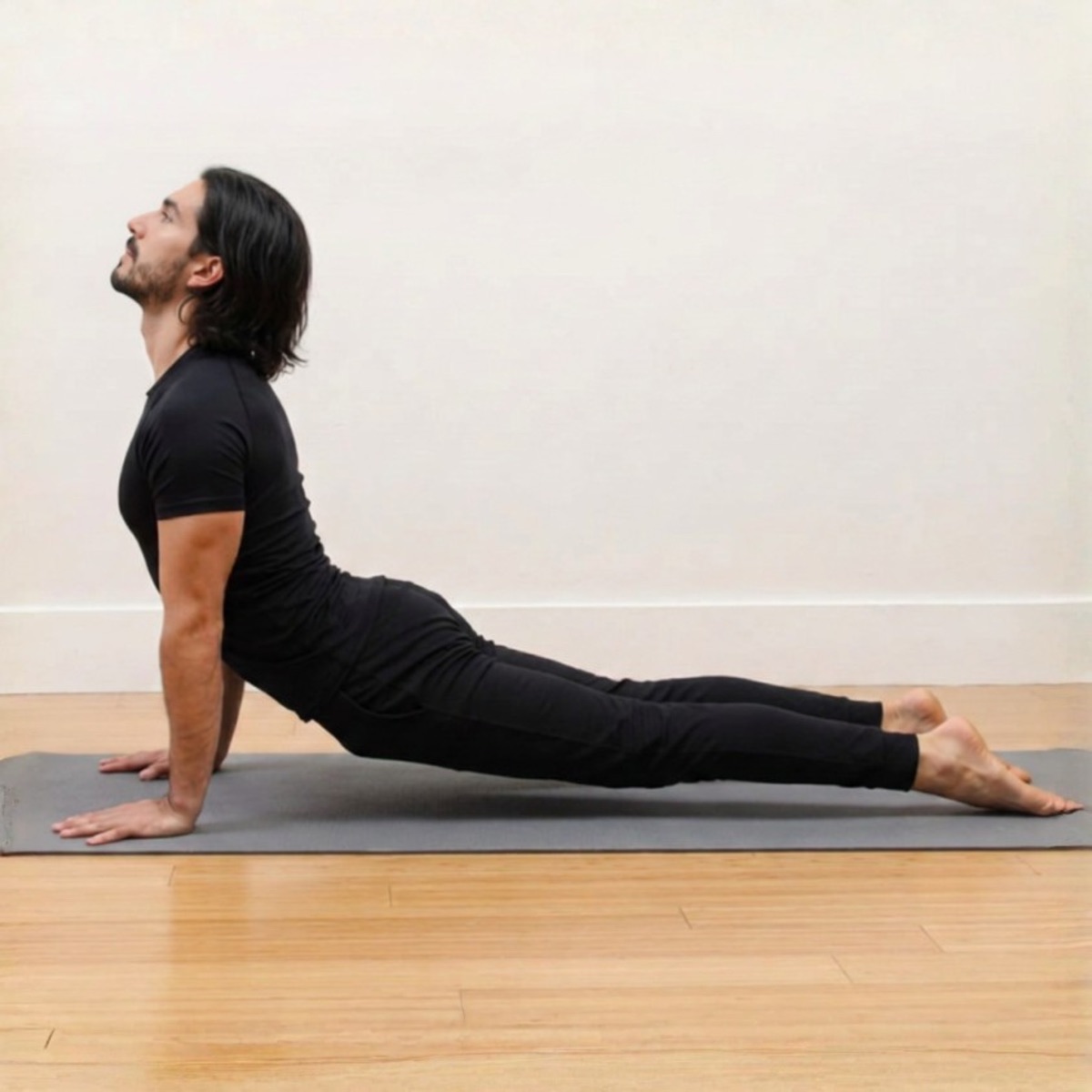
Preparación Preparation
Boca abajo, con los empeines apoyados y las manos junto a las costillas bajas.
Face down, tops of the feet on the floor and hands beside the lower ribs.
Entrando en la Postura Entering the Pose
- 1Coloca las manos junto a las costillas bajas, con los codos pegados al cuerpo.
- 2Al inhalar, estira los brazos y eleva el pecho y las caderas del suelo.
- 3Solo las manos y los empeines tocan la esterilla: los muslos quedan en el aire.
- 1Place the hands beside the lower ribs, elbows hugging the body.
- 2On an inhale, straighten the arms and lift chest and hips off the floor.
- 3Only hands and the tops of the feet touch the mat: the thighs stay in the air.
Modificaciones y Apoyos Modifications & Props
Si te falta fuerza o la zona lumbar se queja, haz Bhujangasana: es la misma forma con los muslos apoyados y mucha menos carga. Unos bloques bajo las manos te dan altura mientras ganas fuerza.
If you lack the strength or your lower back complains, do Bhujangasana instead: same shape with the thighs supported and far less load. Blocks under the hands give you height while you build strength.
Alineación Clave Key Alignment
- Los muslos despegados del suelo: si se quedan apoyados, es una Cobra, no un Perro Boca Arriba.
- Hombros justo encima de las muñecas y lejos de las orejas.
- Empuja los empeines contra el suelo y mantén las piernas activas.
- Thighs lifted off the floor: if they stay down, it is a Cobra, not an Upward Dog.
- Shoulders stacked over the wrists and drawn away from the ears.
- Press the tops of the feet down and keep the legs engaged.
Respiración y Mirada Breathing and Gaze
- Inhala al subir; no aguantes el aire una vez arriba.
- Mirada al frente o ligeramente arriba, sin echar la cabeza atrás.
- Inhale as you lift; do not hold your breath once you are up.
- Gaze forward or slightly up, without dropping the head back.
Salida Segura Safe Release
Exhala y empuja las caderas atrás hacia Adho Mukha Svanasana, o baja el cuerpo al suelo.
Exhale and press the hips back into Adho Mukha Svanasana, or lower the body to the floor.
Beneficios Benefits
- Abre pecho, hombros y todo el frente del cuerpo
- Fortalece brazos, muñecas y la musculatura de la espalda
- Estira el psoas y los flexores de la cadera
- Contrarresta la postura encorvada de estar sentado
- Es el eslabón entre Chaturanga y el Perro Boca Abajo en el vinyasa
- Opens chest, shoulders and the entire front body
- Strengthens arms, wrists and the back muscles
- Stretches the psoas and hip flexors
- Counters the hunched posture of sitting
- It is the link between Chaturanga and Downward Dog in a vinyasa
Duración Duration
10-20 segundos
10-20 seconds
Contraindicaciones Contraindications
- Lumbalgia o hernia discal
- Síndrome del túnel carpiano o lesión de muñeca
- Lesión de hombro
- Embarazo
- Dolor de cabeza
- Cirugía abdominal reciente
Esta lista no sustituye a un diagnóstico. Si tienes una lesión, cursas un embarazo o sigues un tratamiento médico, consulta con un profesional de la salud antes de practicar esta postura.
- Lower back pain or herniated disc
- Carpal tunnel syndrome or wrist injury
- Shoulder injury
- Pregnancy
- Headache
- Recent abdominal surgery
This list is not a diagnosis. If you have an injury, are pregnant or are under medical treatment, consult a health professional before practising this pose.
Contrapostura Counterpose
Adho Mukha Svanasana o Balasana
Empujar las caderas atrás neutraliza de inmediato la extensión lumbar. Es la transición natural del vinyasa.
Adho Mukha Svanasana or Balasana
Pressing the hips back immediately neutralizes the lumbar extension. It is the natural vinyasa transition.
La diferencia con la Cobra no es cuánto subes, sino qué toca el suelo. En Bhujangasana los muslos siguen apoyados y el trabajo es de espalda; en Urdhva Mukha solo tocan las manos y los empeines, y el trabajo pasa a brazos y piernas. Si tus muslos rozan la esterilla, estás haciendo una Cobra alta.
The difference from Cobra is not how high you lift, but what touches the floor. In Bhujangasana the thighs stay down and the work is in the back; in Urdhva Mukha only hands and the tops of the feet touch, and the work moves to arms and legs. If your thighs graze the mat, you are doing a high Cobra.