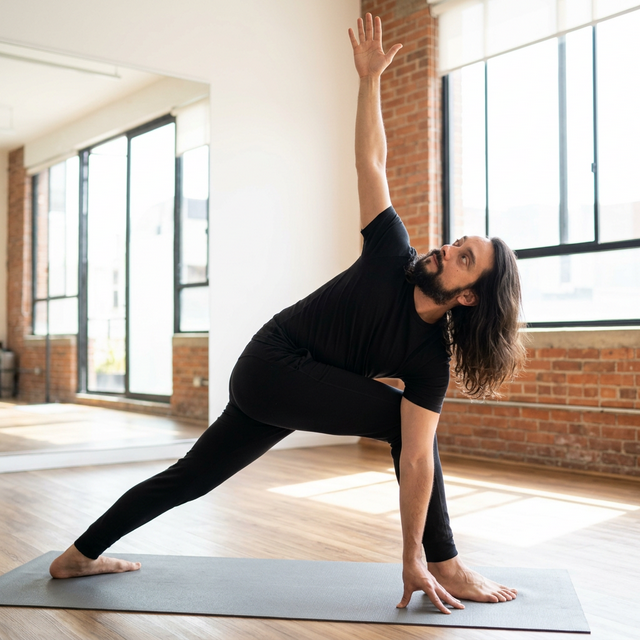
Preparación Preparation
Comienza de pie en Tadasana en la parte delantera de la esterilla, con un bloque de yoga al alcance de la mano delantera.
Begin standing in Mountain Pose at the front of your mat, with a yoga block within reach of your front hand.
Entrando en la Postura Entering the Pose
- 1
Desde una base amplia, gira el pie derecho 90° hacia adelante y el izquierdo ligeramente hacia adentro.
- 2
Cuadra las caderas hacia el frente.
- 3
Inhala para alargar la columna y exhala rotando el torso hacia la derecha. Lleva la mano izquierda al exterior del pie derecho. Si no es posible, puede quedar la mano en el suelo frente al arco del pie derecho o encima de un bloque.
- 1
From a wide stance, turn the right foot forward 90° and the left foot slightly inward (about 60°).
- 2
Square the hips toward the front of the mat.
- 3
Lengthen the spine on an inhale and, as you exhale, rotate the torso to the right bringing the left hand to the outside of the right foot (shin, block, or floor). If not possible, place the hand on the floor in front of the right heel or on a block.
Modificaciones y Apoyos Modifications & Props
Utiliza un bloque debajo de tu mano inferior para mayor estabilidad y longitud, especialmente si la torsión compromete tu espalda baja.
Use a block under your bottom hand for more stability and length, especially if the twist compromises your lower back.
Alineación Clave Key Alignment
-
Mantén ambas piernas sumamente activas, presionando el borde externo del pie trasero contra el suelo.
-
Eleva la cadera izquierda y empuja suavemente la cadera derecha hacia atrás y hacia adentro para estabilizar la pelvis.
-
Rota desde el centro del núcleo (ombligo) hacia arriba, abriendo el pecho.
-
Keep both legs extremely active, firmly pressing the outer edge of the back foot into the mat.
-
Lift the left hip and gently draw the right hip back and in to stabilize the pelvis.
-
Rotate from your core center (navel) upward, opening your chest broadly.
Respiración y Mirada Breathing and Gaze
-
Inhala profundamente para encontrar longitud en la columna.
-
Exhala para profundizar suavemente en la torsión. Fija la mirada en el pulgar de la mano elevada.
-
Inhale deeply to find length in your spine.
-
Exhale to gently deepen the twist. Fix your gaze on the thumb of your raised hand.
Salida Segura Safe Release
Inhala profundo, mantén el núcleo activo y deshaz la torsión lentamente hacia el centro, regresando a Tadasana.
Inhale deeply, keep your core engaged, and slowly untwist to the center, returning to Tadasana.
Beneficios Benefits
- Añade rotación al estiramiento: trabaja la columna en dos planos
- Estira isquiotibiales y cadena posterior de forma intensa
- Mejora el equilibrio en una base muy estrecha
- Masajea los órganos abdominales por la torsión
- Enseña a cuadrar las caderas, que es la clave real de la postura
- Adds rotation to the stretch: works the spine in two planes
- Intensely stretches hamstrings and the posterior chain
- Improves balance on a very narrow base
- Massages the abdominal organs through the twist
- Teaches you to square the hips, the real key to the pose
Duración Duration
20-30 segundos
20-30 seconds
Contraindicaciones Contraindications
- Hernia discal o lumbalgia
- Lesión sacroilíaca
- Embarazo
- Presión arterial baja
- Migraña o dolor de cabeza
- Problemas de equilibrio
- Diarrea
Esta lista no sustituye a un diagnóstico. Si tienes una lesión, cursas un embarazo o sigues un tratamiento médico, consulta con un profesional de la salud antes de practicar esta postura.
- Herniated disc or lower back pain
- Sacroiliac injury
- Pregnancy
- Low blood pressure
- Migraine or headache
- Balance problems
- Diarrhea
This list is not a diagnosis. If you have an injury, are pregnant or are under medical treatment, consult a health professional before practising this pose.
Contrapostura Counterpose
Uttanasana con las rodillas suaves
Deshace la torsión y descomprime la zona lumbar y sacroilíaca.
Uttanasana with soft knees
Undoes the twist and decompresses the lower back and sacroiliac area.
Prioriza la longitud de la columna sobre la profundidad de la rotación. Una columna encorvada restringe la respiración y compromete la zona lumbar. El contacto del brazo izquierdo con la pierna derecha es esencial para mantener la estabilidad y la longitud de la columna.
Prioritize spinal length over depth of rotation. A rounded spine restricts breathing and compromises the lower back. The contact of the left arm with the right leg is essential to maintain stability and spinal length.