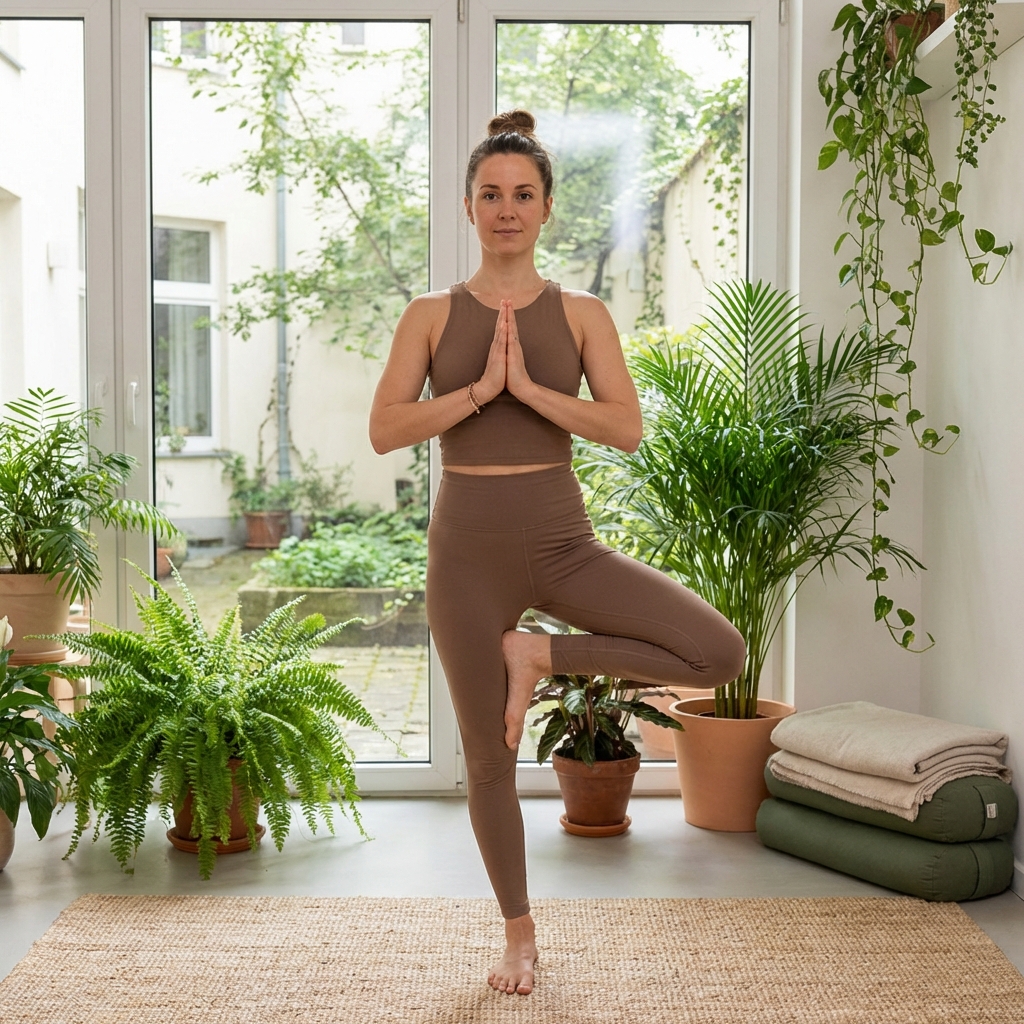
Preparación Preparation
Párate en Tadasana. Encuentra un punto fijo para la mirada (Drishti).
Stand in Tadasana. Find a fixed gaze point (Drishti).
Entrando en la Postura Entering the Pose
- 1Desplaza el peso a la pierna izquierda.
- 2Coloca la planta del pie derecho en el muslo izquierdo interior, evitando la rodilla.
- 3Junta las palmas en posición de rezo (Namaste) frente al corazón.
- 1Shift weight to left leg.
- 2Place sole of right foot on inner left thigh, avoiding the knee.
- 3Join palms in prayer position (Namaste) in front of the heart.
Modificaciones y Apoyos Modifications & Props
Apóyate en una pared para mayor equilibrio. Puedes colocar el pie en el tobillo con los dedos tocando el suelo como apoyo.
Support yourself on a wall for better balance. You can place the foot at the ankle with toes touching the floor.
Alineación Clave Key Alignment
- Empuja el pie contra el muslo y el muslo contra el pie con igual fuerza.
- Lleva la rodilla derecha hacia atrás para abrir la cadera sin desalinear la pelvis.
- Alarga la columna and mantén los hombros relajados y bajos.
- Push foot against thigh and thigh against foot with equal force.
- Bring right knee back to open the hip without misaligning the pelvis.
- Lengthen the spine and keep shoulders relaxed and low.
Respiración y Mirada Breathing and Gaze
- Inhala para encontrar estabilidad y exhala mientras colocas el pie en la pierna de apoyo.
- Mantén una respiración suave y rítmica; fijando la mirada en un punto inmóvil (drishti) para facilitar el equilibrio sin aguantar el aire.
- Inhale to find stability and exhale as you place the foot on the supporting leg.
- Maintain a soft, rhythmic breath; fix gaze on an unmoving point (drishti) to aid balance without holding the breath.
Salida Segura Safe Release
Lleva la rodilla hacia adelante, baja el pie con control y relaja los brazos.
Bring knee forward, lower foot with control and relax arms.
Beneficios Benefits
- Mejora el equilibrio y la estabilidad del tobillo
- Fortalece muslos, gemelos, tobillos y columna
- Abre la cadera de la pierna elevada en rotación externa
- Entrena la concentración: si la mirada se va, el equilibrio se va
- Mejora la propiocepción y previene caídas
- Improves balance and ankle stability
- Strengthens thighs, calves, ankles and spine
- Opens the hip of the lifted leg in external rotation
- Trains concentration: if the gaze wanders, so does the balance
- Improves proprioception and prevents falls
Duración Duration
30-60 segundos
30-60 seconds
Contraindicaciones Contraindications
- Lesión de rodilla o tobillo
- Problemas de equilibrio o vértigo
- Hipertensión: no mantengas los brazos elevados
- Migraña
- Nunca apoyes el pie sobre la rodilla: encima o debajo, jamás en la articulación
Esta lista no sustituye a un diagnóstico. Si tienes una lesión, cursas un embarazo o sigues un tratamiento médico, consulta con un profesional de la salud antes de practicar esta postura.
- Knee or ankle injury
- Balance problems or vertigo
- High blood pressure: do not keep the arms raised
- Migraine
- Never place the foot on the knee: above or below, never on the joint
This list is not a diagnosis. If you have an injury, are pregnant or are under medical treatment, consult a health professional before practising this pose.
Contrapostura Counterpose
Tadasana (Postura de la Montaña)
Reequilibra el peso en los dos pies y relaja el tobillo de apoyo.
Tadasana (Mountain Pose)
Rebalances the weight on both feet and relaxes the supporting ankle.
Si te cuesta el equilibrio, visualiza raíces naciendo de tu pie de apoyo que se hunden en la tierra. No coloques el pie nunca sobre la rodilla, ya que la presión lateral puede dañarla; usa la pantorrilla o el tobillo si el muslo es demasiado alto.
If balance is hard, visualize roots growing from your support foot sinking into the earth. Never place foot on knee; use calf or ankle if the thigh is too high.