Preparación Preparation
Desde Virabhadrasana I o desde una zancada baja, con la rodilla delantera flexionada a 90 grados sobre el tobillo.
From Virabhadrasana I or a low lunge, front knee bent to 90 degrees over the ankle.
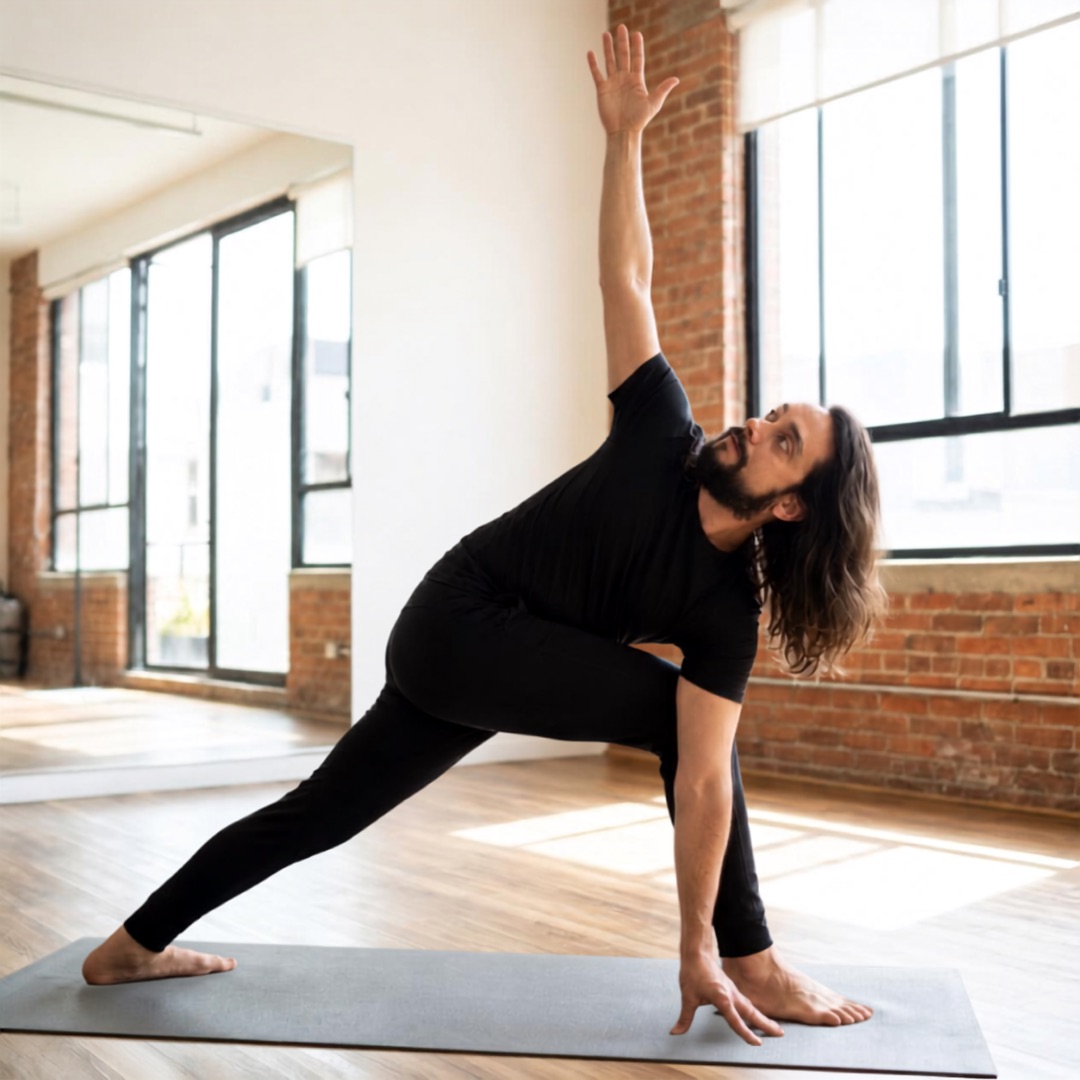
Entrando en la Postura Entering the Pose
- 1Junta las manos al pecho en oración y cuadra las caderas hacia el frente de la esterilla.
- 2Al exhalar, gira el torso y apoya el codo contrario en el exterior del muslo delantero.
- 3Si tienes espacio, baja esa mano al suelo por fuera del pie y estira el otro brazo hacia el techo.
- 1Bring the hands to prayer at the chest and square the hips toward the front of the mat.
- 2On an exhale, rotate the torso and hook the opposite elbow outside the front thigh.
- 3If you have the space, take that hand to the floor outside the foot and extend the other arm to the ceiling.
Modificaciones y Apoyos Modifications & Props
Apoya la rodilla trasera en el suelo: quita casi toda la exigencia de equilibrio y te deja trabajar la torsión, que es lo que importa. Un bloque bajo la mano de abajo, y las manos en oración si el hombro no llega.
Lower the back knee to the floor: it removes almost all the balance demand and lets you work the twist, which is the point. Use a block under the lower hand, and keep the hands in prayer if the shoulder will not reach.
Alineación Clave Key Alignment
- La rodilla delantera se queda a 90 grados y justo encima del tobillo, nunca colapsada hacia dentro.
- Cuadra las caderas antes de girar: la torsión sale del torso, no de la pelvis.
- Empuja el talón trasero (o la rodilla, si está apoyada) para tener una base real.
- The front knee stays at 90 degrees and stacked over the ankle, never collapsing inward.
- Square the hips before you twist: the rotation comes from the torso, not the pelvis.
- Press through the back heel (or the knee, if it is down) to build a real base.
Respiración y Mirada Breathing and Gaze
- Alarga la columna en la inhalación y profundiza la torsión en la exhalación.
- Mirada al pulgar de la mano de arriba, o al frente si el cuello se resiente.
- Lengthen the spine on the inhale and deepen the twist on the exhale.
- Gaze at the thumb of the top hand, or forward if your neck complains.
Salida Segura Safe Release
Inhala, deshaz la torsión, apoya las dos manos a los lados del pie y vuelve a Adho Mukha Svanasana.
Inhale, unwind the twist, place both hands beside the foot and return to Adho Mukha Svanasana.
Beneficios Benefits
- Combina torsión profunda, fuerza de piernas y equilibrio en una sola postura
- Masajea los órganos digestivos con el efecto de exprimir y soltar
- Fortalece cuádriceps, glúteos y tobillos de la pierna delantera
- Abre el pecho y moviliza la columna torácica, que es la que menos gira
- Mejora la movilidad de cadera y la estabilidad en una base estrecha
- Combines a deep twist, leg strength and balance in a single pose
- Massages the digestive organs through the wring-and-release effect
- Strengthens quadriceps, glutes and ankle of the front leg
- Opens the chest and mobilizes the thoracic spine, the segment that rotates least
- Improves hip mobility and stability on a narrow base
Duración Duration
20-30 segundos
20-30 seconds
Contraindicaciones Contraindications
- Hernia discal o lumbalgia
- Lesión sacroilíaca
- Lesión de rodilla o menisco
- Embarazo
- Hipertensión o migraña
- Problemas de equilibrio o vértigo
Esta lista no sustituye a un diagnóstico. Si tienes una lesión, cursas un embarazo o sigues un tratamiento médico, consulta con un profesional de la salud antes de practicar esta postura.
- Herniated disc or lower back pain
- Sacroiliac injury
- Knee or meniscus injury
- Pregnancy
- High blood pressure or migraine
- Balance problems or vertigo
This list is not a diagnosis. If you have an injury, are pregnant or are under medical treatment, consult a health professional before practising this pose.
Contrapostura Counterpose
Adho Mukha Svanasana
Deshace la torsión y descarga la pierna delantera de forma simétrica antes de cambiar de lado.
Adho Mukha Svanasana
Undoes the twist and unloads the front leg symmetrically before switching sides.
No la confundas con Parivrtta Trikonasana: la diferencia no es la torsión, es la pierna. Aquí la rodilla delantera va flexionada a 90 grados; en el Triángulo Invertido va completamente recta. Si estiras la pierna, has cambiado de postura, y con ella cambian la base, el equilibrio y de dónde sale el giro.
Do not confuse it with Parivrtta Trikonasana: the difference is not the twist, it is the leg. Here the front knee is bent to 90 degrees; in Revolved Triangle it is completely straight. Straighten the leg and you have changed pose, and with it the base, the balance and where the rotation comes from.