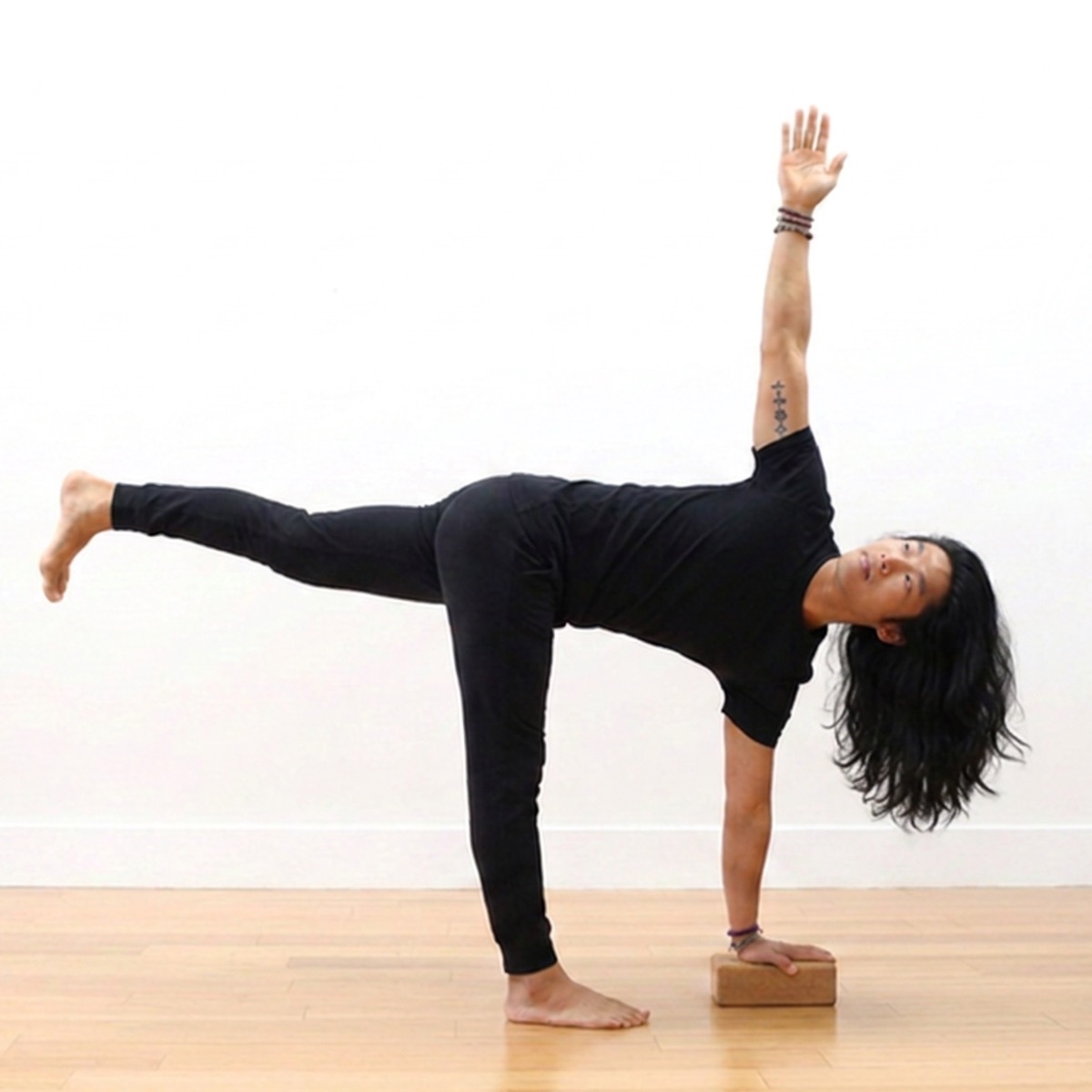
Preparación Preparation
Desde una zancada baja o desde Parivrtta Trikonasana, con un bloque alto bajo la mano.
From a low lunge or from Parivrtta Trikonasana, with a tall block under the hand.
Entrando en la Postura Entering the Pose
- 1Apoya en el suelo o en un bloque la mano contraria al pie delantero, por fuera de ese pie: es la misma mano que en Parivrtta Trikonasana.
- 2Eleva la pierna trasera hasta la horizontal y estira poco a poco la pierna de apoyo.
- 3Al exhalar, gira el torso hacia la pierna de apoyo y estira el otro brazo hacia el techo.
- 1Place the hand opposite the front foot onto the floor or a block, outside that foot: it is the same hand as in Parivrtta Trikonasana.
- 2Lift the back leg to horizontal and slowly straighten the standing leg.
- 3On an exhale, rotate the torso toward the standing leg and extend the other arm to the ceiling.
Modificaciones y Apoyos Modifications & Props
Bloque alto bajo la mano, siempre. Para aprenderla, apoya el pie de atrás en la pared a la altura de la cadera: te sostiene y te deja concentrarte en la torsión, que es lo difícil.
A tall block under the hand, always. To learn it, press the back foot into a wall at hip height: it holds you up and lets you focus on the twist, which is the hard part.
Alineación Clave Key Alignment
- Las caderas cuadradas hacia el suelo, al contrario que en la Media Luna clásica, donde se abren.
- Pie elevado en flex con los dedos mirando al suelo, no hacia fuera.
- La torsión sale del torso: las caderas se mantienen niveladas mientras el pecho gira.
- Hips squared toward the floor, unlike the classic Half Moon where they open.
- Lifted foot flexed with the toes pointing down, not out to the side.
- The twist comes from the torso: the hips stay level while the chest rotates.
Respiración y Mirada Breathing and Gaze
- Alarga la columna en la inhalación y profundiza la torsión en la exhalación.
- Mirada al suelo hasta que el equilibrio sea firme; solo entonces al pulgar de arriba.
- Lengthen the spine on the inhale and deepen the twist on the exhale.
- Gaze at the floor until the balance is steady; only then to the top thumb.
Salida Segura Safe Release
Mira al suelo, deshaz la torsión, dobla la rodilla de apoyo y baja el pie de atrás con control.
Look down, unwind the twist, bend the standing knee and lower the back foot with control.
Beneficios Benefits
- Combina equilibrio sobre una pierna con una torsión profunda: pocas posturas piden tanto
- Fortalece tobillo, rodilla y toda la cadena de la pierna de apoyo
- Moviliza la columna torácica, el segmento que menos gira en el día a día
- Masajea los órganos abdominales por el efecto de la torsión
- Afina la propiocepción: exige corregir el equilibrio en tiempo real
- Combines single-leg balance with a deep twist: few poses ask for so much
- Strengthens the ankle, knee and the whole chain of the standing leg
- Mobilizes the thoracic spine, the segment that rotates least day to day
- Massages the abdominal organs through the twisting action
- Sharpens proprioception: it demands real-time balance corrections
Duración Duration
15-25 segundos
15-25 seconds
Contraindicaciones Contraindications
- Hernia discal o lumbalgia
- Lesión sacroilíaca
- Problemas de equilibrio o vértigo
- Lesión de tobillo o rodilla
- Embarazo
- Presión arterial baja o migraña
Esta lista no sustituye a un diagnóstico. Si tienes una lesión, cursas un embarazo o sigues un tratamiento médico, consulta con un profesional de la salud antes de practicar esta postura.
- Herniated disc or lower back pain
- Sacroiliac injury
- Balance problems or vertigo
- Ankle or knee injury
- Pregnancy
- Low blood pressure or migraine
This list is not a diagnosis. If you have an injury, are pregnant or are under medical treatment, consult a health professional before practising this pose.
Contrapostura Counterpose
Uttanasana con las rodillas suaves
Deshace la torsión y devuelve simetría a la pelvis antes de cambiar de lado.
Uttanasana with soft knees
Undoes the twist and restores symmetry to the pelvis before switching sides.
Es la Media Luna con las caderas al revés. En Ardha Chandrasana las abres hacia el lado; aquí las cierras hacia el suelo y giras por encima de ellas. Si notas que la cadera de arriba se abre, has vuelto sin querer a la versión clásica: baja un poco la pierna, vuelve a cuadrar y gira desde el esternón, no desde la pelvis.
It is Half Moon with the hips reversed. In Ardha Chandrasana you open them to the side; here you square them toward the floor and rotate above them. If the top hip starts to open, you have drifted back into the classic version: lower the leg slightly, re-square, and turn from the sternum, not the pelvis.