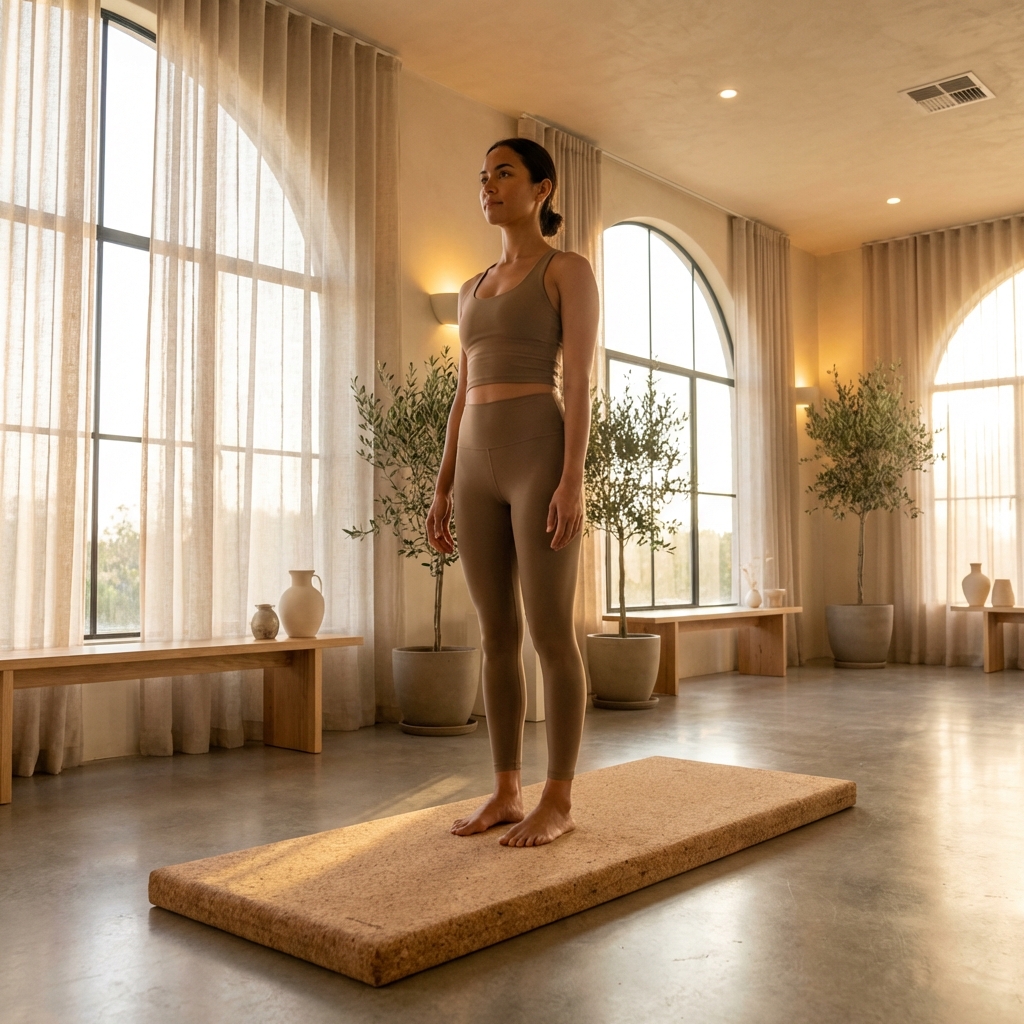
Preparación Preparation
Pies paralelos, a la anchura de las caderas, piernas estiradas, articulaciones de las rodillas desbloqueadas.
Feet parallel, hip-width apart, legs straight, knee joints unlocked.
Entrando en la Postura Entering the Pose
- 1Levanta lentamente los brazos por encima de la cabeza hasta que estén paralelos junto a las orejas; palmas enfrentadas.
- 2Al principio, alcanza el máximo con las manos, estirando firmemente el torso y alargando la columna.
- 1Slowly lift your arms above your head until they are parallel next to your ears; palms facing each other.
- 2At first, reach your maximum with your hands, firmly stretching the torso and lengthening the spine.
Modificaciones y Apoyos Modifications & Props
Si tienes dolor lumbar, separa los pies al ancho de las caderas. Si te cuesta mantener los brazos arriba, mantén las manos en las caderas.
If you have lower back pain, separate feet hip-width. If holding arms up is hard, keep hands on hips.
Alineación Clave Key Alignment
- Mantén la pelvis en posición neutral, evitando la inclinación hacia adelante de las caderas.
- Mete ligeramente el coxis para aplanar la zona lumbar.
- Relaja todos los músculos innecesarios, especialmente en las manos y los hombros.
- Keep the pelvis in a neutral position, avoiding forward tilt of the hips.
- Slightly tuck the tailbone to flatten the lower back.
- Relax all unnecessary muscles, especially in the hands and shoulders.
Respiración y Mirada Breathing and Gaze
- Inhala profundamente mientras elevas los brazos para entrar en la postura.
- Permite que la respiración fluya de forma calmada y suave, entregándote completamente a la quietud y a la postura.
- Inhale deeply while lifting your arms to enter the pose.
- Allow the breath to flow calmly and smoothly, surrendering completely to the stillness and the pose.
Salida Segura Safe Release
Lleva los brazos lenta y gradualmente hacia abajo a los lados del cuerpo con conciencia, sin que las manos se toquen, relajando los hombros con una exhalación.
Bring the arms slowly and gradually down to the sides of the body with awareness, without the hands touching, relaxing the shoulders with an exhale.
Beneficios Benefits
- Enseña la alineación correcta sobre la que se construye todo lo demás
- Fortalece muslos, rodillas, tobillos y arcos del pie
- Corrige la postura y reduce el dolor de espalda cotidiano
- Desarrolla la conciencia del peso y la verticalidad
- Es engañosamente activa: no es 'estar de pie', es sostenerse
- Teaches the correct alignment everything else is built on
- Strengthens thighs, knees, ankles and the arches of the feet
- Corrects posture and reduces everyday back pain
- Develops awareness of weight and verticality
- It is deceptively active: it is not 'standing', it is holding yourself
Duración Duration
30-60 segundos
30-60 seconds
Contraindicaciones Contraindications
- Vértigo o hipotensión: no cierres los ojos
- Problemas de equilibrio: practica cerca de una pared
- Varices: no la sostengas mucho tiempo
- Lesión de hombro: no eleves los brazos
Esta lista no sustituye a un diagnóstico. Si tienes una lesión, cursas un embarazo o sigues un tratamiento médico, consulta con un profesional de la salud antes de practicar esta postura.
- Vertigo or low blood pressure: keep the eyes open
- Balance problems: practise near a wall
- Varicose veins: do not hold it for long
- Shoulder injury: do not raise the arms
This list is not a diagnosis. If you have an injury, are pregnant or are under medical treatment, consult a health professional before practising this pose.
Contrapostura Counterpose
No necesita contrapostura
Tadasana es la postura neutra de referencia: es a ella a la que se vuelve desde las demás.
No counterpose needed
Tadasana is the neutral reference pose: it is what you return to from the others.
Presiona firmemente los cuatro puntos de apoyo de tus pies (talón interno/externo y base del dedo gordo/pequeño) para crear un enraizamiento que active toda la musculatura de tus piernas hasta el core.
Press firmly on the four support points of your feet (inner/outer heel and base of big/little toe) to create a grounding that activates all leg muscles up to the core.