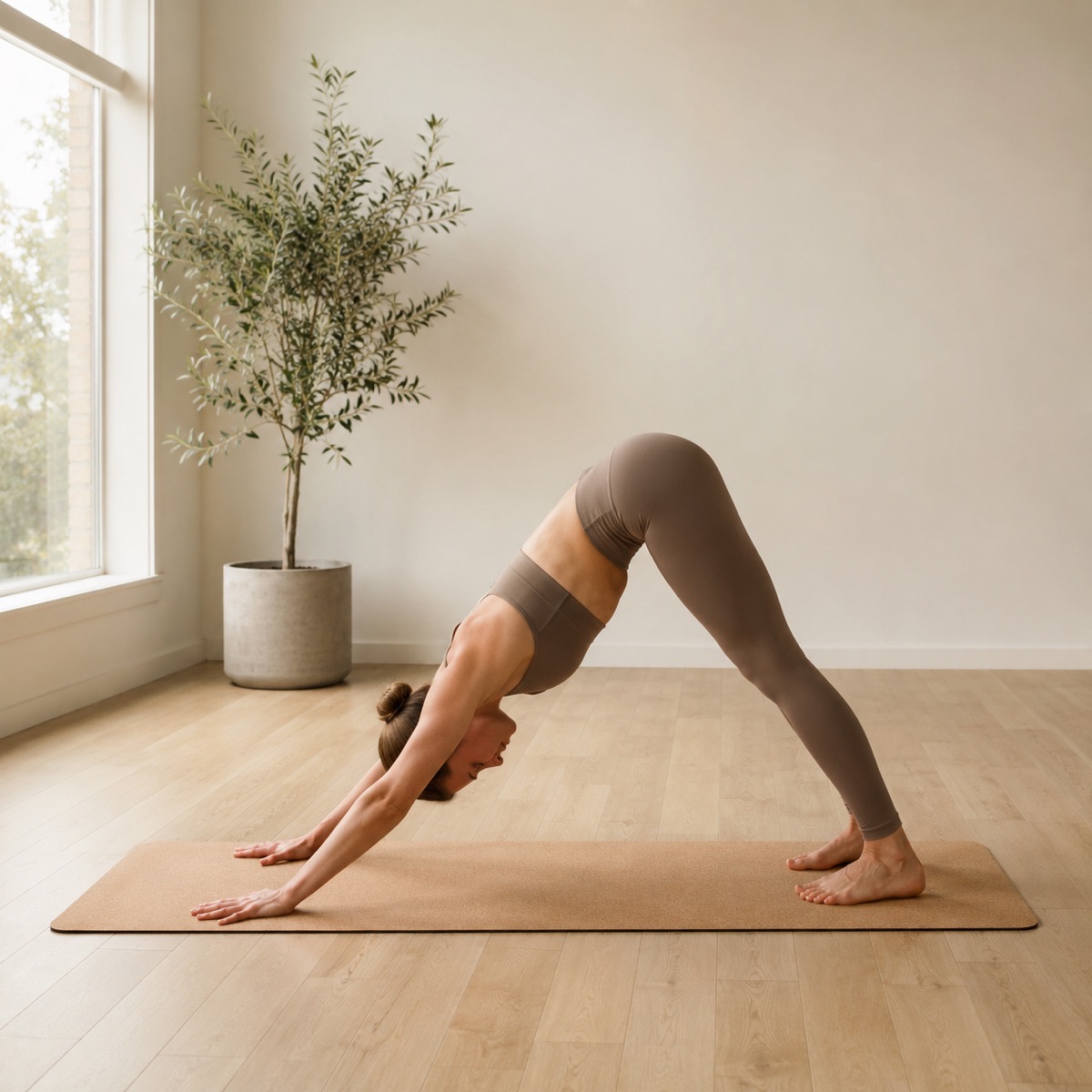
Preparación Preparation
A cuatro patas, con las manos bajo los hombros y las rodillas bajo las caderas.
On all fours, hands under the shoulders and knees under the hips.
Entrando en la Postura Entering the Pose
- 1Separa las manos al ancho de los hombros y abre bien los dedos.
- 2Mete los dedos de los pies y, al exhalar, eleva las caderas hacia el techo.
- 3Empuja el suelo con las manos y lleva el pecho hacia los muslos.
- 1Place the hands shoulder-width apart and spread the fingers wide.
- 2Tuck the toes and, on an exhale, lift the hips toward the ceiling.
- 3Press the floor away with your hands and draw the chest toward the thighs.
Modificaciones y Apoyos Modifications & Props
Dobla mucho las rodillas: los talones no tienen que tocar el suelo. Si las muñecas te molestan, apoya las manos en bloques o pasa a la versión con antebrazos.
Bend the knees generously: the heels do not need to touch the floor. If your wrists complain, use blocks under the hands or switch to the forearm version.
Alineación Clave Key Alignment
- Reparte el peso entre el índice y el pulgar, no en el borde externo de la mano.
- Gira los bíceps hacia delante para sacar los hombros de las orejas.
- Antes que curvar la espalda, dobla las rodillas y despega los talones.
- Spread the weight between index finger and thumb, not the outer edge of the hand.
- Rotate the biceps forward to draw the shoulders away from the ears.
- Before rounding the back, bend the knees and lift the heels.
Respiración y Mirada Breathing and Gaze
- Respiración Ujjayi continua: es un descanso activo, no una pausa.
- Mirada al ombligo o entre los pies, con el cuello suelto.
- Continuous Ujjayi breathing: it is an active rest, not a pause.
- Gaze to the navel or between the feet, neck relaxed.
Salida Segura Safe Release
Exhala, baja las rodillas al suelo y descansa en Balasana.
Exhale, lower the knees to the floor and rest in Balasana.
Beneficios Benefits
- Alarga toda la cadena posterior: isquiotibiales, gemelos y espalda
- Fortalece hombros, brazos y muñecas sin cargar la columna
- Es una inversión suave: mejora la circulación hacia la cabeza
- Descomprime la columna por tracción de las caderas hacia arriba
- Es el punto de descanso y de tránsito de cualquier vinyasa
- Lengthens the entire posterior chain: hamstrings, calves and back
- Strengthens shoulders, arms and wrists without loading the spine
- A gentle inversion: it improves circulation toward the head
- Decompresses the spine as the hips draw upward
- It is the resting and transition point of any vinyasa
Duración Duration
30-60 segundos
30-60 seconds
Contraindicaciones Contraindications
- Síndrome del túnel carpiano o lesión de muñeca
- Lesión de hombro
- Hipertensión o glaucoma
- Embarazo avanzado
- Diarrea
- Lesión de isquiotibiales
Esta lista no sustituye a un diagnóstico. Si tienes una lesión, cursas un embarazo o sigues un tratamiento médico, consulta con un profesional de la salud antes de practicar esta postura.
- Carpal tunnel syndrome or wrist injury
- Shoulder injury
- High blood pressure or glaucoma
- Late pregnancy
- Diarrhea
- Hamstring injury
This list is not a diagnosis. If you have an injury, are pregnant or are under medical treatment, consult a health professional before practising this pose.
Contrapostura Counterpose
Balasana (Postura del Niño)
Descarga muñecas y hombros y devuelve la cabeza por encima del corazón de forma progresiva.
Balasana (Child's Pose)
Unloads wrists and shoulders and gradually brings the head back above the heart.
El error universal es obsesionarse con bajar los talones. Adho Mukha no es una postura de piernas: es una postura de espalda. Prioriza la columna larga y los hombros abiertos, y si para eso tienes que doblar las rodillas casi en escuadra, dóblalas.
The universal mistake is obsessing over getting the heels down. Adho Mukha is not a leg pose: it is a back pose. Prioritize a long spine and open shoulders, and if that means bending the knees almost to a right angle, bend them.